
BASECAMP
A counter-service kitchen that carries from morning into evening, Nettle borrows its language from the gear culture of the Wasatch — the color stories, graphics, and material honesty of equipment built to be used hard and kept. The intent was a room with the ease of a trailhead and the finish of a considered interior: utilitarian in its bones, warm in its register.
Real materials led the palette. Nettle sits beside Millcreek's Brickyard, named for the industry that once shaped the area, and the building itself is brick. Rather than quote that history directly, the interior answers it through scale. Large blocks of miscanthus — an emerging material pressed from a rapidly renewable grass — give the room its mass and texture, a quiet nod to the brickworks rendered in a material of the present.
Nearly every element was authored for the space. Fixed seating, countertops, and benches take their profile from the ski lift. Tables were developed from base to surface; the tops recall enamelware, off-white with a fine red rim, collapsing the camp table and the dining table into one object.
The narrative extends past the dining room. The bathrooms borrow the intimacy of shelter at camp — enclosed, close, a small retreat. A bulletin board, wayfinding, and hand-painted signage complete the vernacular, giving the space the character of a mountain outpost without tipping into theme. Trail ticking along polished concrete direct circulation from entry to queuing.
Behind the line, the kitchen is organized around the rhythm of the cook, balancing counter-service pace with the demands of an evening crowd.
Scope included full interior design, kitchen and bar layout, equipment specification, custom furniture and fixture development, finishes, art and signage.
Developed alongside Madelon Juliano, whose hand runs through the project's narrative and palette. She built the color story, contributed original artwork, and brought a graphic sensibility that carries from the brand into the room itself.
Fabrication
Signage — Brimley Neon
Sign painting — Tiny Shley
Millwork — Wasatch Workshop
Metal fabrication — Bending Solutions
Powder coating — Steel Coatings
NETTLE

COSMICA
CHARACTER
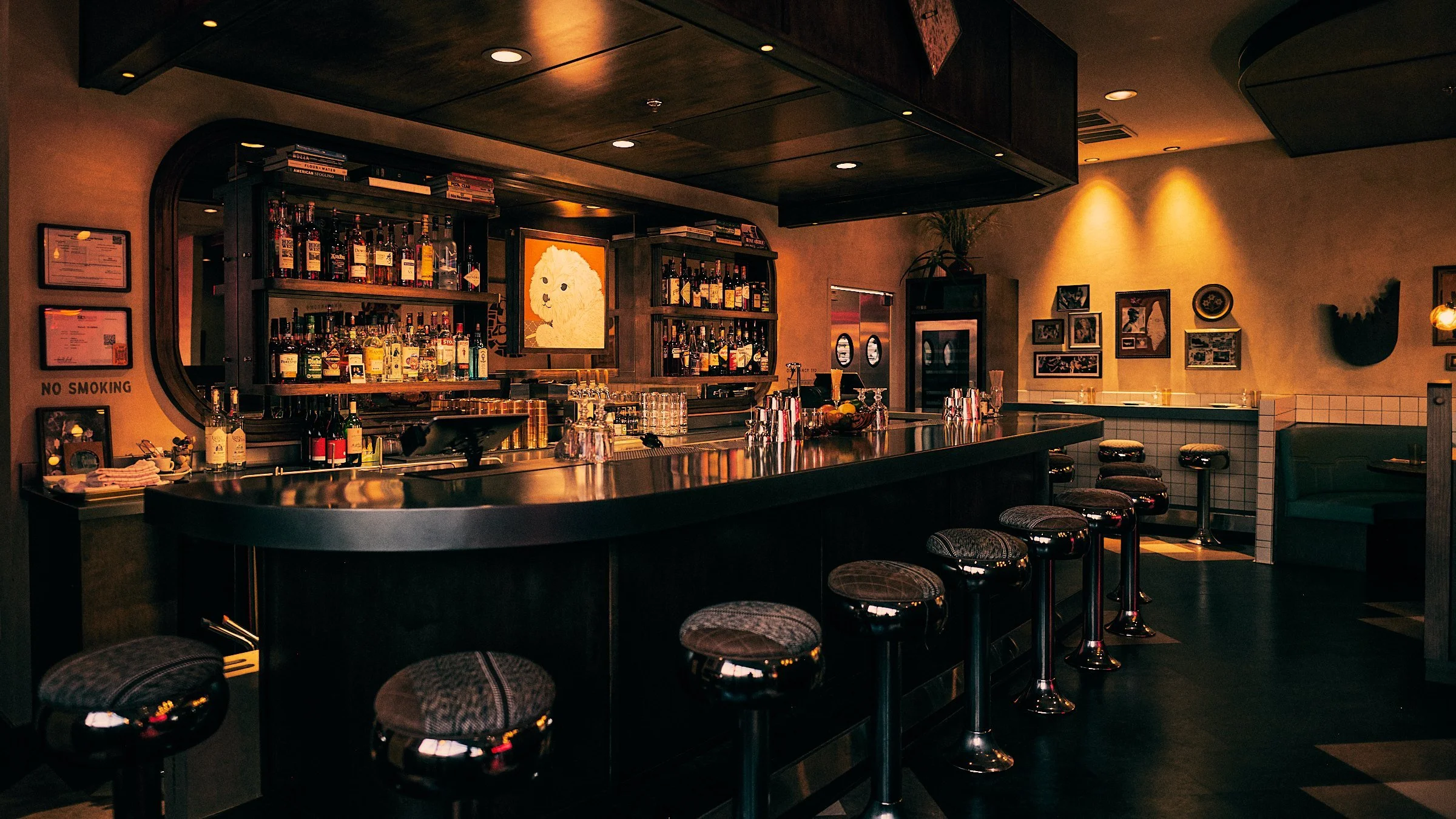
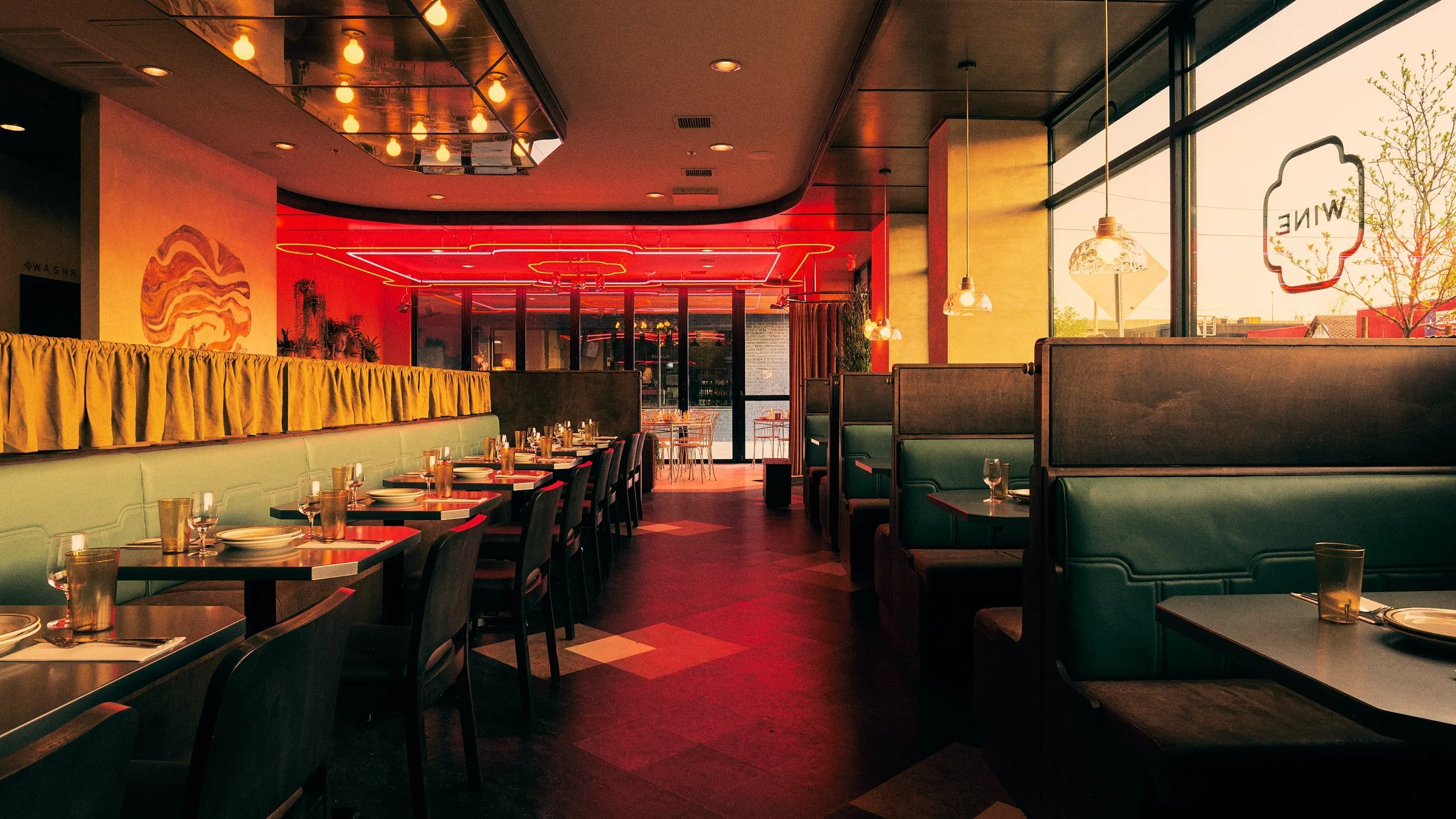
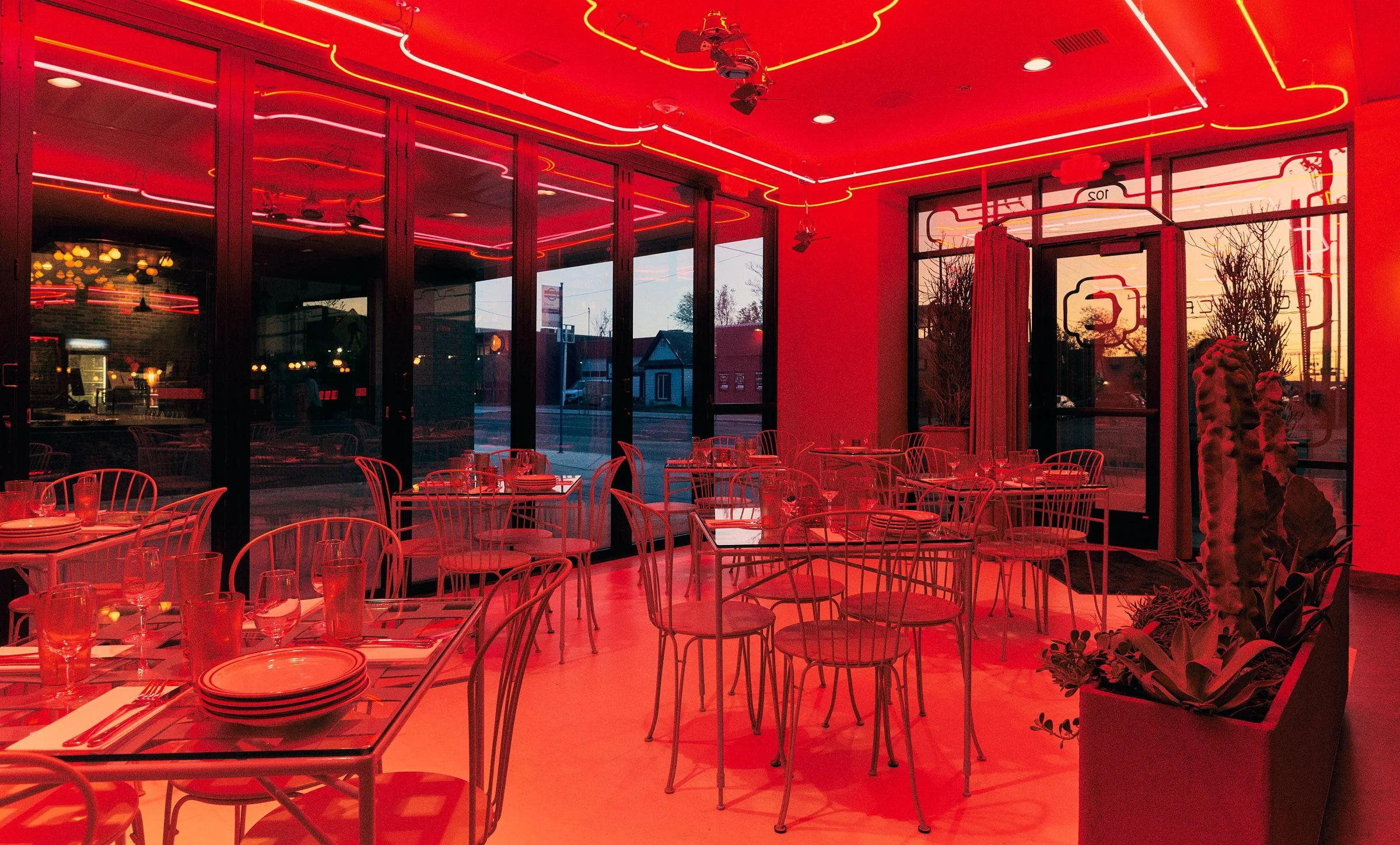
An Italian restaurant with a deep custom soul, Cosmica celebrates handmade food, natural wine, and the kind of hospitality that leaves a mark. Located in Salt Lake City’s Granary district, the space was designed entirely from scratch — nearly every surface, object, and fixture was custom-fabricated to reinforce the restaurant’s bold identity.
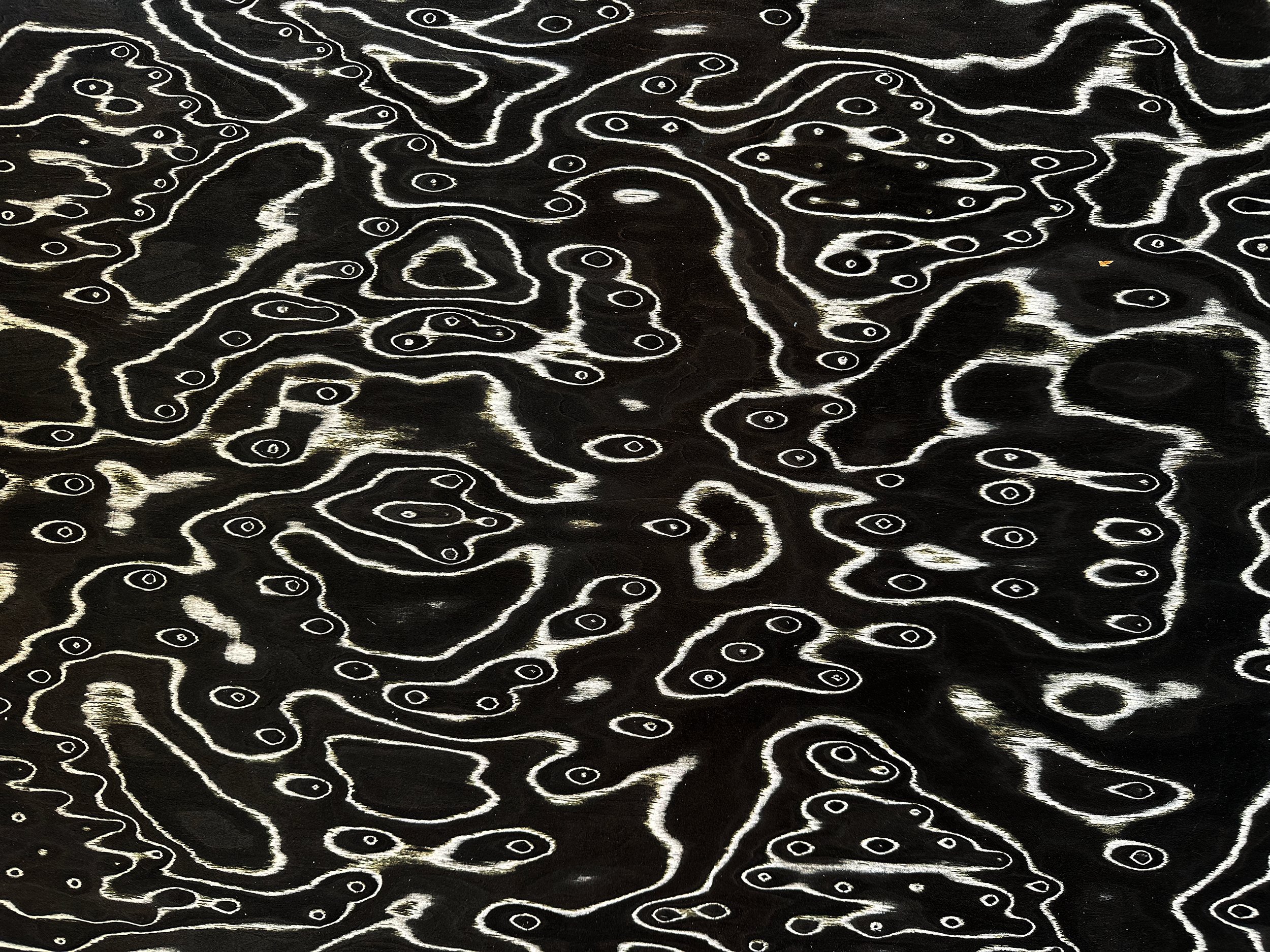
Angled tables, sewn cushions, tambour liquor cabinets, and patterned neon lighting reflect the brand’s expressive personality. The ceiling glows with the restaurant’s signature waveform, while burl-wood, soft tile, drapery, and wood tones add warmth and rhythm. Two immersive bathrooms — one Sofia Coppola–themed, the other Rhinestone Cowboy — further the narrative of high-touch play.
The layout supports smooth, high-volume service and natural guest flow, while inviting diners to settle in for hours. A vibrant, complete space rooted in good food and company.
Scope included full restaurant interior design, bar and kitchen layout optimization, all furniture, surfaces, lighting design elements, and custom fixture development.
Created in close collaboration with Madelon Juliano. She shaped the narrative, crafted original art, led the color story and branding, and left her mark across menus and key design moments.
Fabrication
Neon — Brimley Neon
Art — Madelon Juliano
Photography
McCade Gordon

BAR NOHM
THRESHOLD
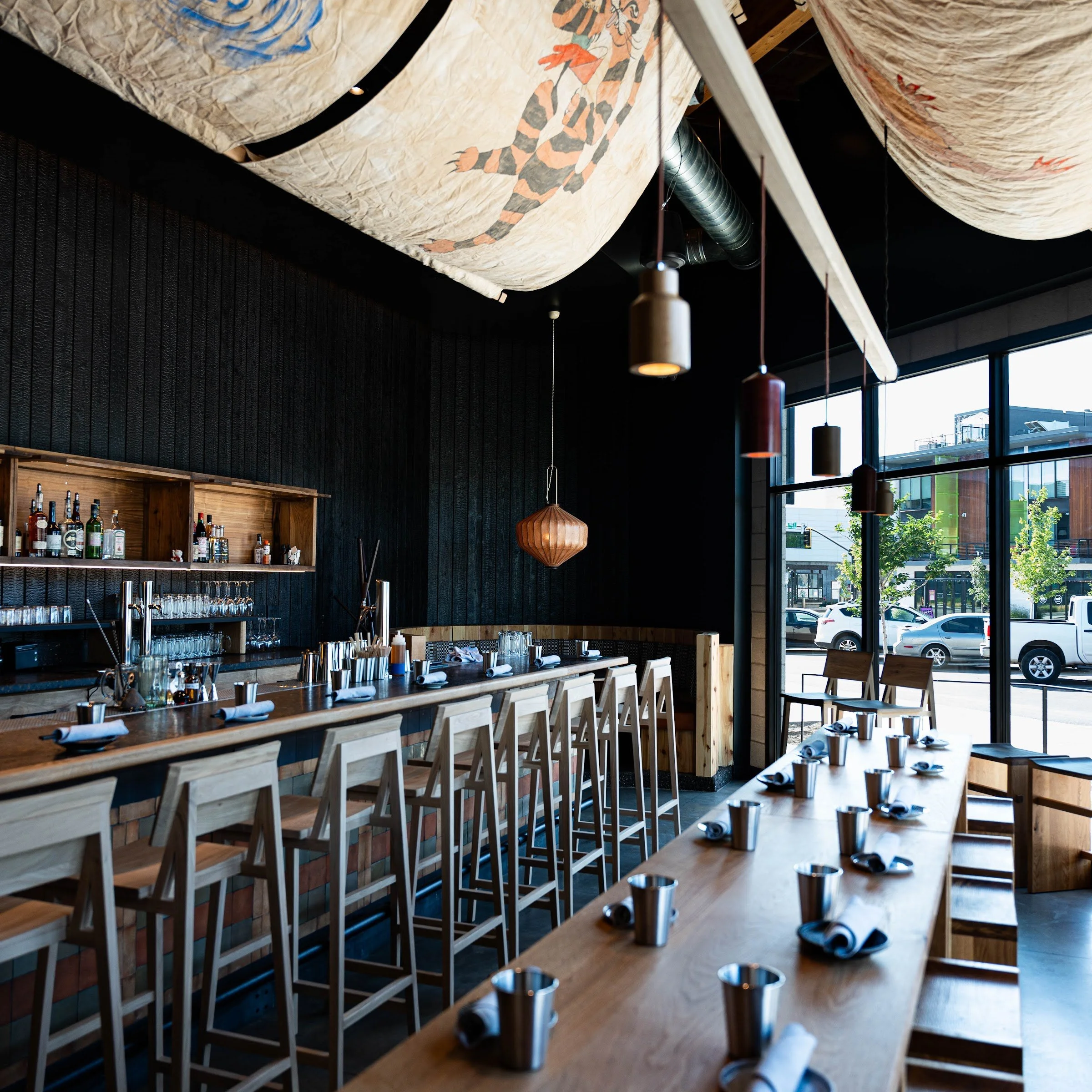
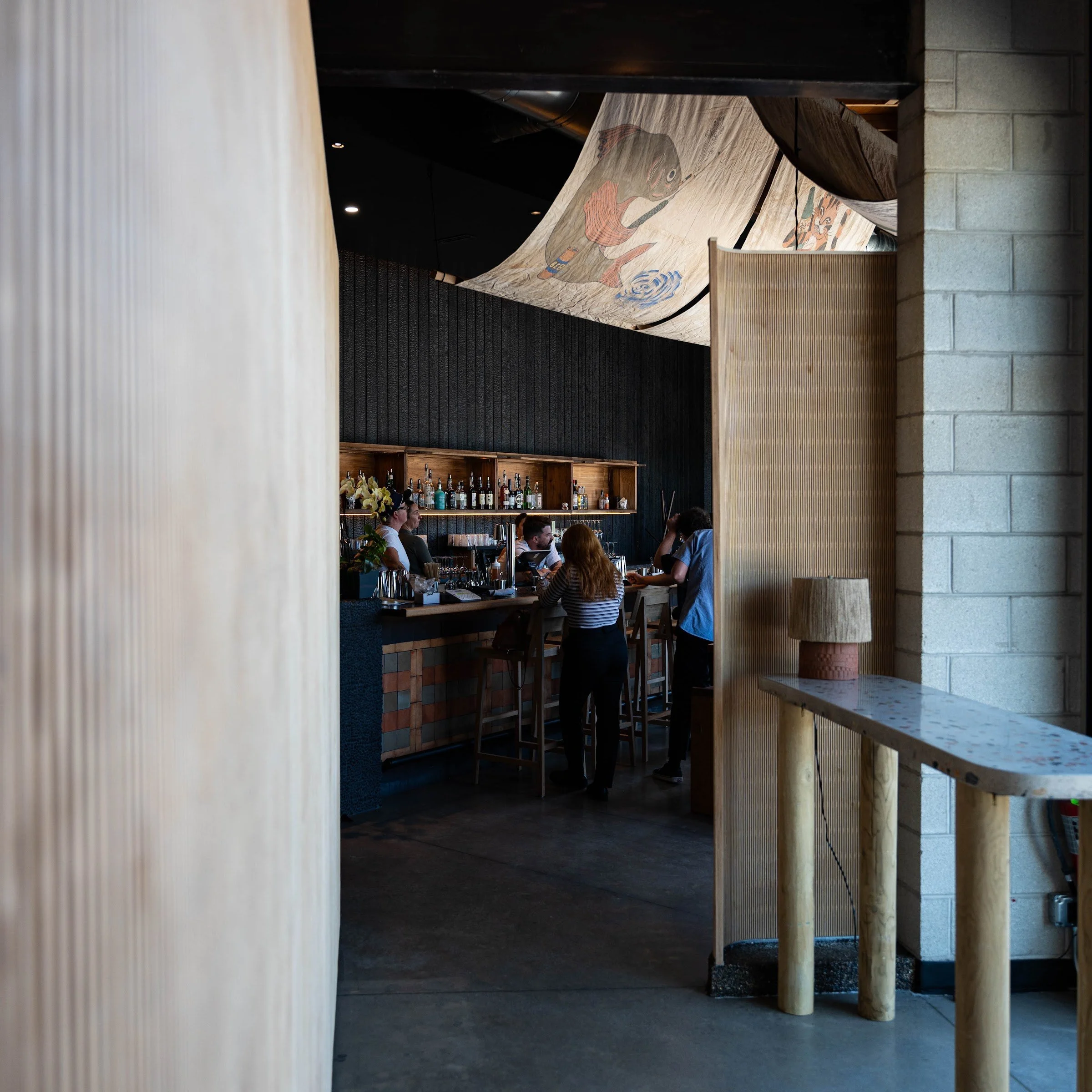
A modern izakaya rooted in a fictional geography that bridges Korea’s Baekdudaegan with Utah’s Wasatch Front. The narrative was crafted to offset the risk of preciousness — a foil to the room’s polish. The result is an environment built with care but never overly careful: a place for fast service, slow hangs, and guests, styled or wild.
The space is sectioned into intimate zones, layered with rhythm and friction. A meandering Dukta screen was reworked into a topographic divider, mounted into a pebbled curb and hand-stained in tea to add depth. Overhead, panels nod to pojagi quilting traditions—patchworked and slightly off-kilter, injecting color, asymmetry, and irreverence above the dining room. Circulation is guided entirely by built-in elements—without signage or fuss.
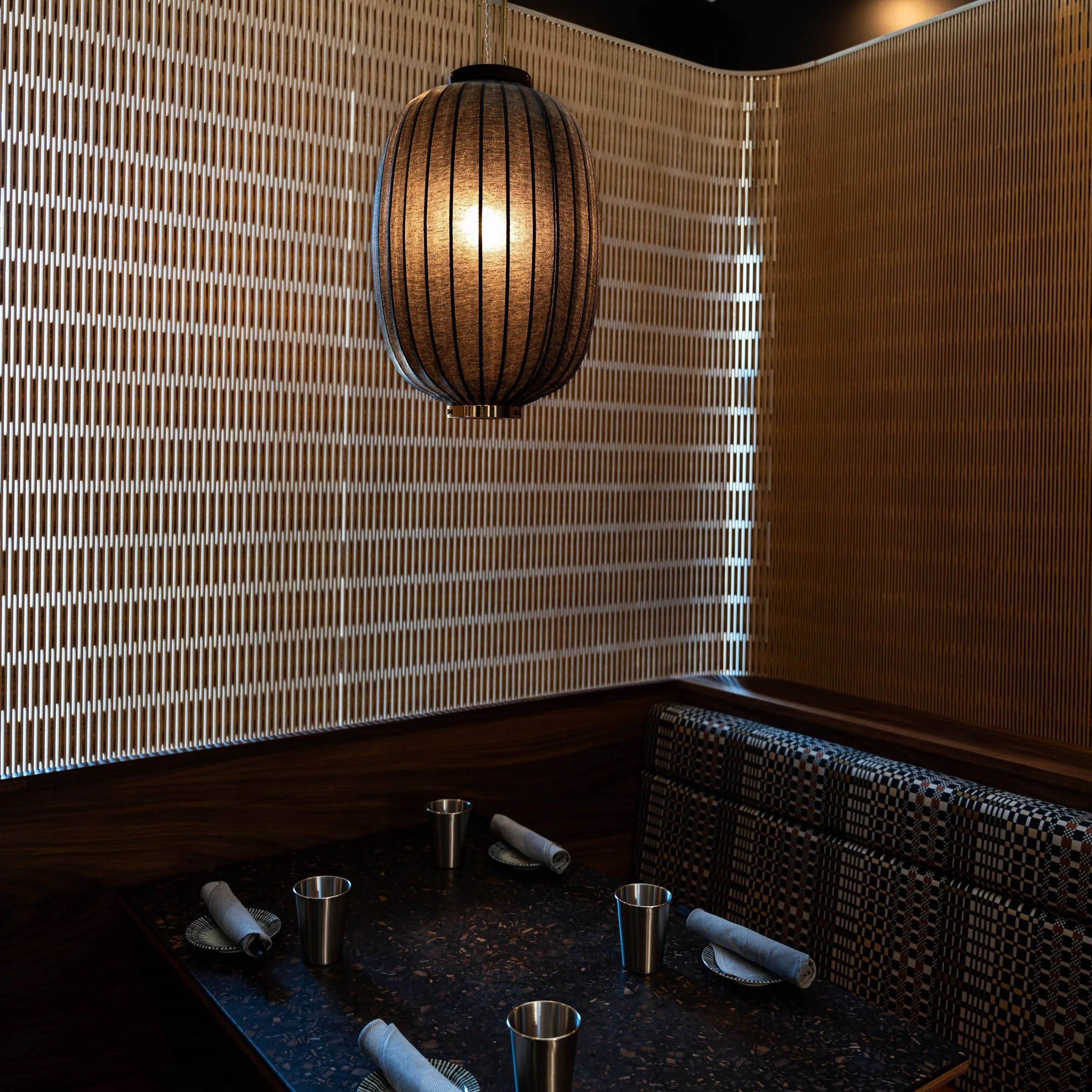
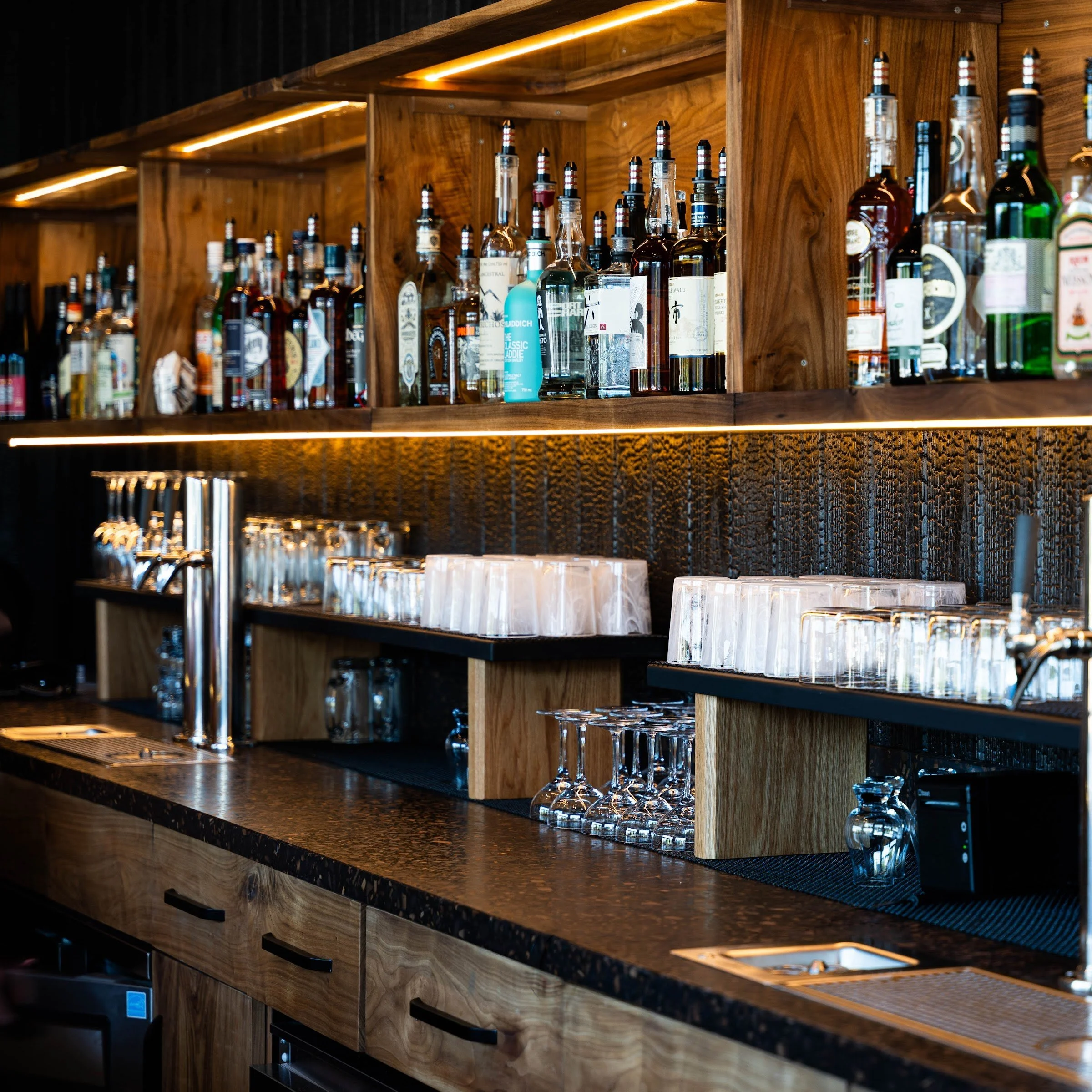
Material reuse and conceptual reframing drove the palette. Bleached walnut from the previous space was reshaped into barrister-style liquor cabinets—“spirits in books”—a nod to both the liquor within and the original function of the cabinet as a vessel for stories. Stone and wood elements recall a mountain stream: river rock service stations, terrazzo tables with hand-selected aggregate, and large oak tables with expressive joinery that feel like trees rooted in the room. Together, these elements ground the space with rhythm, tactility, and weight.
The linear light over the communal table was designed and built in-house from routed oak dowels, leather rope and knotwork. Ryan tied every knot and hung it himself, along with the ceiling panels overhead. Lanterns from Taiwan Lantern light the quieter seating zones. A cedar-wrapped onsen booth is tucked into the far corner near the end of the bar, and the chef’s room holds a pair of smaller booths with custom upholstery and focused light. A cherrywood sliding door on a concealed track connects to Water Witch, scaled and toned to sit comfortably with the room next door.
The kitchen serves both NOHM and Water Witch, each with James Beard recognition. Despite the tight footprint, the layout supports concurrent workflows. Food and beverage prep are split cleanly, supporting everything from whole ice block carving and fermentation to protein breakdown and daily juice runs. Noren panels mark the transition, but function sets the tone: sharp, efficient, and built to move.
Scope included interior architecture, kitchen and bar planning, spatial layout, furniture and lighting design, and material development, plus the layout of a prep kitchen shared by two high-volume teams.
Created in close collaboration with Madelon Juliano—who shaped the narrative arc, visual identity, artwork, and emotional pulse of the space.
Fabrication
General Contractor – Industry Concrete
Millwork — Oliver Lewis
Mural & Sculpture – Madelon Juliano
Canvas work – Ruby Johnson
Lanterns — Taiwan Lantern
Photography
Form and Frame LLC

TRACE
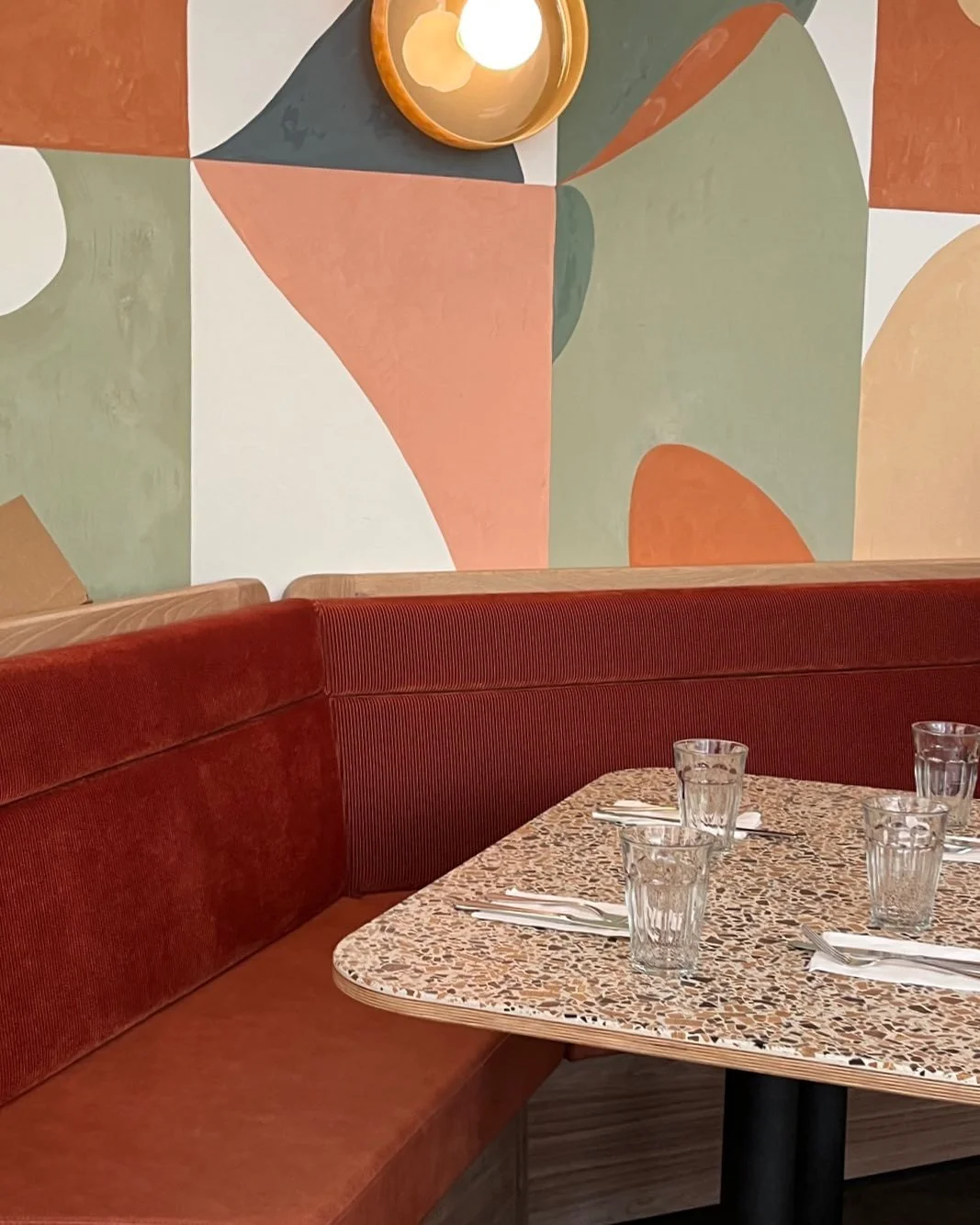
A modern café reimagined for full-service dining, The Daily blends operational clarity with warm, tailored design. Originally built as a light-filled coffee bar, the remodel introduced a large, multi-angled oak banquette wrapped in rust corduroy, leather, and grasscloth to anchor and soften the dining zone. The custom piece maximized seating, defined distinct zones, while preserving spatial flow — the result of extensive study to balance utility with elegance.
Custom terrazzo tables in Foresso, handmade cork ceiling tiles, and flat packed oak chairs add warmth, rhythm, and refinement. A matching host stand and updated glass pendants complete the shift in atmosphere — from casual stop-in to lingering hospitality.
Madelon Juliano repainted the feature wall with a large, abstract mural, replacing the original print with a gesture scaled to the room’s new proportions. Her contribution helped carry the refreshed story forward with color, shape, and soul.
Scope included spatial reprogramming, seating layout, furniture and surface design, material development, lighting coordination, and color collaboration.